Friday, March 3, 2017
Ethos Of Shot Up in the Sexual Revolution
Ethos of a piece is considered to be the credibility of the author and the words she or he are using to describe an experience. In the case of this poem, the ethos is incredibly strong as the story being told is from a primary source. The writer of this poem, Cynthia Huntington, actually went through the sixties as a part of the counterculture movement and her words represent how she felt during this era. Contrary to popular belief, although this was a time of sexual freedom, Huntington speaks about how sexual freedom wasn't true freedom for her. Gender politics play a role in that she feels used and that her value as a woman is lost. This juxtaposes the supposed sexual freedom because it shows that men can be open with all of their experiences but women are still used and the only difference with this "freedom" is that women can now say that they are promiscuous but they are still considered to be objects. What is the point of freedom if value is not ascribed to their liberty? The platform from which Huntington speaks leaves area for bias but she does entertain the notion of enjoying her new found "free love" like her friends only to abandon this idea by accepting how it makes her feel like an object instead of a person. As a result the ethos of her writing is strengthened and as readers we can immerse ourselves in her writing.

Pathos of Woodstock Poster
Woodstock was a cultural
phenomenon, as "3 Days of Peace &
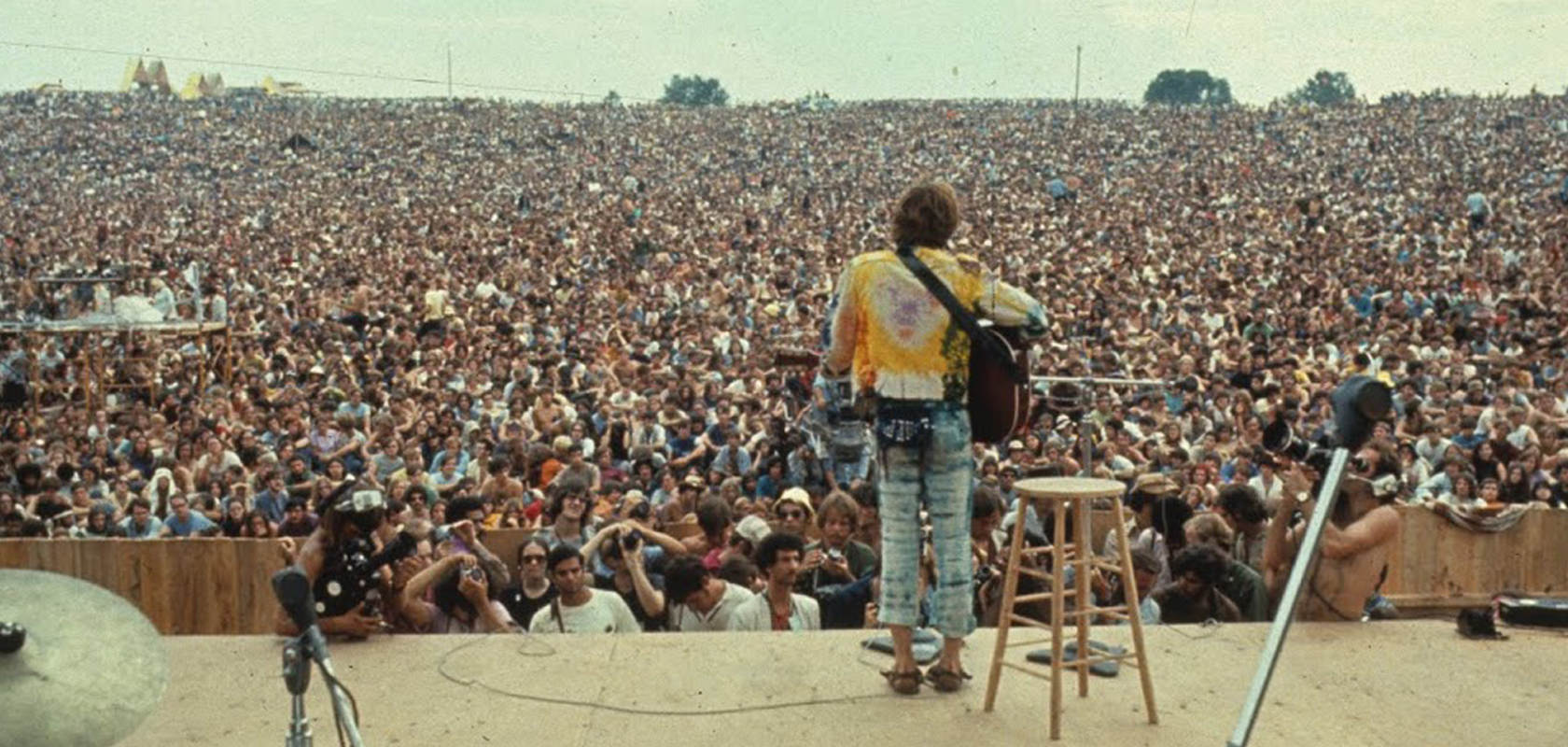
Music" defined a generation that pushed the “hippie movement” during a time of war and uncertainty. Nearly half a million
gathered to witness one of the most famous and influential music festivals of
all time, with posters such as this one opening the invitation to all people.
The creator of this poster strategically uses pathos to attract a wide
audience. At first glance, we see WOODSTOCK written in large bold letter,
followed by MUSIC AND ARTS FAIR. This gives the audience a clear sense of what
the poster is for and calls attention to the event. The text is written
in black and a simple font, making the concert seem open and easy. The date and location are also bolded so that
the audience can better remember these details if they wish to attend.
There are musical notes placed around the text so that the audience can
immediately think about their favorite musical compositions of the artists
listed below. There are also two photographs; one is of Jimi Hendrix and the
other of Janis Joplin. They were the picture-perfect duo to represent the youth culture of “liberation.” Jimi and
Janis were sizzling icons of the counterculture movement, transcending
society’s expectations for a black man and white woman. They are remembered
today for crossing race and gender barriers that few had dared to go near.
Almost every young liberal knew who these two people were, and placing their
photographs on the poster only fired up their desire to go to the concert.
There are numerus other names on the poster that could have sparked an
interest in a viewer and caused them to attend. The background is a bright rainbow fusion.
These colors project an open and exciting tone to the poster that catches
the attention of a passerby. The colors are reminiscent of the Gay Pride flag, in which the rainbow colors are a symbol of LGBT pride. The poster
is overall one that promotes a fun and lighthearted feel for a music and art
festival that turns out to become one of the most monumental symbols of
patriotism and countercultural revolution. This was a time of change in
America, and events such as Woodstock united a community of people searching
for love, acceptance, and music.


Wednesday, March 1, 2017
Audience of Cynthia Huntington’s Poem: “Shot Up in the Sexual Revolution: The True Adventures of Suzy Creamcheese"
Cynthia Huntington’s poem, “Shot Up in the Sexual Revolution: The True Adventures of Suzy Creamcheese,” provides an intimate glimpse into the mind of a young woman who is incontent with her sexual experiences. Huntington wrote this piece during the prime of the sexual revolution and the rise of feminism. The intended audience is most likely young liberals who are similarly struggling with their sexuality. It can also reach out those that cannot comprehend the mindset of such liberals; an attempt to understand the contemporary “hippie dream.” She also writes the poem for herself, providing liberation from hiding her deepest emotions and feeling guilt for frustration with the constrained idea of sex. The poem is a mature work, largely due to the explicit diction, using words generally considered taboo in literature such as, “fuck,” “penis,” “cock,” and “nipples.” The candid nature of the poem gives a frank sense of what society expects from women, but it is clear that women want more and can do more. This poem is not for the faint of heart or the callow. There is much figurative language that portray the raw image of what the female body has to offer. Huntington’s use of rhetoric convinces the audience of genuity and purity though it also has a titillating nature. One can almost feel for the women that is going such a turmoil in discovering what her body is capable of in a society that has only just opened its eyes to the existence of homosexuality.
Cynthia Huntington’s poem, “Shot Up in the Sexual Revolution: The True Adventures of Suzy Creamcheese,” provides an intimate glimpse into the mind of a young woman who is incontent with her sexual experiences. Huntington wrote this piece during the prime of the sexual revolution and the rise of feminism. The intended audience is most likely young liberals who are similarly struggling with their sexuality. It can also reach out those that cannot comprehend the mindset of such liberals; an attempt to understand the contemporary “hippie dream.” She also writes the poem for herself, providing liberation from hiding her deepest emotions and feeling guilt for frustration with the constrained idea of sex. The poem is a mature work, largely due to the explicit diction, using words generally considered taboo in literature such as, “fuck,” “penis,” “cock,” and “nipples.” The candid nature of the poem gives a frank sense of what society expects from women, but it is clear that women want more and can do more. This poem is not for the faint of heart or the callow. There is much figurative language that portray the raw image of what the female body has to offer. Huntington’s use of rhetoric convinces the audience of genuity and purity though it also has a titillating nature. One can almost feel for the women that is going such a turmoil in discovering what her body is capable of in a society that has only just opened its eyes to the existence of homosexuality.
Kairos of the Suzy Creamcheese Poem
The kairos of the poem is interesting as the poem is not actually from the 60s, but from a 2012 collection of poems. This indicates that despite talking about an event that took place decades ago, its effects are still important enough to revisit and give a perspective on. It seems like the poet is giving commentary on the craziness of the Sexual Revolution and how societal norms concerning modesty, chastity, and promiscuity got warped to the point were people couldn't keep track of how many others they slept with. I believe Huntington intentionally wrote this later to show people nowadays how sex is still sometimes treated as a game and a means of "victory"--exactly how it was treated as a poem--instead of something more complex and deeper. It suggests that some aspects of the Sexual Revolution were thrilling yet also negatively affected that thought of what sex is to us, and that some of those aspects still linger on today in modern culture as a legacy of the movement. For a lot of people even today, there is still some shock factor on how the characters viewed and practiced sex, which makes the message effective even today as commentary on modern sexual practices. This kairotic buildup helped set the stage for the use of the three other main rhetorical devices, particularly pathos, to be used and be effective. Therefore, despite it being written nearly half a century after the event, the poem still contains relevant meaning and social critique due to its special way in building up its kairos.
Woodstock Poster Audience
The Woodstock flyers represented an invitation to the New World Order, a free ticket to an epic musical feat and an even greater countercultural feat. These flyers were aimed towards such a diverse audience that the event attracted one of the largest turnouts in music concert history. Firstly, this audience consisted of people who were fans of rock & roll music, as the flyer highlighted over 25 popular bands and artists. The flyers also were created to catch the attention of creative minds, people who appreciated art, nature, and "surreal mental and physical stimulation". On a deeper level, Woodstock targeted the American population that was frustrated with the current political and social climate of the time. Consequently, this colorful crowd also drew in those who were curious of the counterculture movement but had not fully experienced or understood its meaning. The reason that these people were targeted is because they all mostly were forward-thinkers who shared common goals for the future of the country, specifically peace. In order to spread their messages, they needed a union to establish their power, influence, and legitimateness in the eyes of the proponents of the current American culture. Woodstock was this progressive monumental congregation, and it resulted in the audience that became a microcosm of the new social identity that rapidly expanded throughout the country.
Kairos of The Woodstock Flyer
One cannot overstate the significance of the kairotic moment
known as Woodstock that acted as the culmination of the counterculture movement
of the 1960's. Kairos in rhetoric refers to a pinnacle moment that has a certain
“timeliness” that takes advantage and is exacerbated by the events occurring during
that time period and Woodstock is a prime example of such a moment. Advertised
by flyers as 3 Days of Peace and Music, it was held on August 1969, the turning
point of the decade, and to this day a music festival to its size and renown
and social influence has yet to be seen although there have been efforts to
reproduce it. This inability to recreate Woodstock would best be attributed to
the social climate of the time as there were several factors that resulted in the
success of this festival. At the time, America was still fighting the VietnamWar and many had been disillusioned by the facade of greatness that once accompanied
the thought of war and all that people could see was the violence and hatred
that came with it. Woodstock acted as a sanctuary from the violence and from
the divisiveness of politics and hateful rhetoric and the estimated 400,000
people who attended found what they were looking for; freedom. At a time of
disillusionment, Woodstock was perfectly timed to act as an escape as well as
final hurrah for the whirlwind that had been the 1960's. This music festival was
“one of the greatest moments in popular music history” according to Rolling
Stone’s list “50 Moments That Changed the History of Rock and Roll” and the
greatness can truly be accredited to Kairos and social momentum of the sixties.

Friday, February 24, 2017
Hello!
We will be starting our analysis of the Counterculture movement in the 1960s as well as look into the related Sexual Revolution.
Our first "text" is this flyer for Woodstock, the greatest Counterculture concert of all time:

Our next text will be the poem "Shot Up in the Sexual Revolution: The True Adventures of Suzy Creamcheese" by Cynthia Huntington. It gives an interesting perspective on the rowdy nature of the Sexual Revolution through the eyes of a woman:
That's all for now!
Subscribe to:
Posts (Atom)